What Size Washer Do I Need? A Laundromat Machine Guide
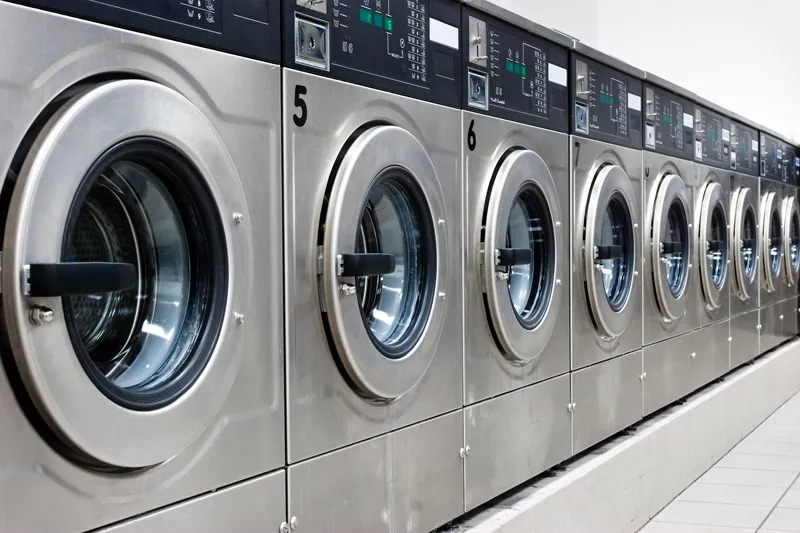
Stand in front of a row of laundromat washers and you'll see machines of all sizes—from compact top-loaders to massive front-load drums that look like they could wash a sleeping bag. Here in Brenham, we see customers pick the wrong size every day. Which one should you use?
Quick Answer
For most weekly laundry loads, use a large (4.0-4.5 cu ft) or extra-large (5.0-6.0 cu ft) washer. Fill the drum about three-quarters full for best cleaning. When in doubt, size up—an overstuffed small washer won't clean properly.
Understanding Washer Capacity
Washer capacity is measured in cubic feet (cu ft). This refers to the interior drum volume—how much physical space is available for your clothes. Here's what each size typically holds:
| Size | Capacity (cu ft) | What It Holds |
|---|---|---|
| Small | 2.0 - 2.5 | 1-2 outfits, delicates, a few shirts |
| Medium | 3.0 - 3.5 | Half a hamper, a couple days of clothes |
| Large | 4.0 - 4.5 | A full hamper, one person's weekly load |
| Extra-Large | 5.0 - 6.0 | A couple's weekly laundry, small bedding |
| Commercial | 7.0 - 8.0+ | Comforters, sleeping bags, large household loads |
Keep in mind that these are general guidelines. The actual amount you can wash depends on fabric type—bulky items like towels and jeans take up more space than t-shirts and underwear.
How to Estimate Your Load Size
Most people underestimate how much their laundry weighs. Here are some common weight guidelines:
- T-shirt: about 0.5 lb
- Pair of jeans: about 2 lbs
- Bath towel: about 1.5 lbs
- Queen sheet set: about 4 lbs
- Hoodie or sweatshirt: about 1.5 lbs
A typical weekly load for one person runs 10-15 lbs. For two people, expect 20-30 lbs. A family of four might generate 40-60 lbs of laundry per week.
A quick visual test: toss your clothes into the washer loosely. If they fill the drum to about three-quarters, you've got a good load. If you have to push clothes down to close the door, you need a bigger machine.
Why Bigger Is (Usually) Better
It's tempting to save a dollar by cramming everything into a smaller washer, but this almost always backfires. Here's why:
- Better cleaning: Clothes need room to tumble and agitate. An overstuffed machine can't move water through the fabric effectively, leaving detergent residue and dirt behind.
- Less wear and tear: When clothes are packed tightly, they rub against each other more aggressively, causing pilling, stretching, and fading.
- More efficient rinsing: A machine that's too full can't rinse properly. You'll end up with soapy residue that makes clothes feel stiff or causes skin irritation.
- Balanced spin cycle: Overloaded machines vibrate excessively during the spin cycle, which can damage the machine and leave clothes wetter than they should be.
The cost difference between a medium and large washer is usually just $1-3. At Alamo Laundry in Brenham, that small upgrade makes a real difference in how clean your clothes come out.
When to Use Each Size
Small washers (2.0 - 2.5 cu ft)
- A handful of delicates you want to wash separately
- A single outfit you need cleaned quickly
- Small items like socks, underwear, or handkerchiefs
Medium washers (3.0 - 3.5 cu ft)
- A few days' worth of clothes for one person
- A load of towels (4-6 bath towels)
- Kids' clothing (smaller items, more per load)
Large washers (4.0 - 4.5 cu ft)
- One person's full weekly laundry
- A queen-size sheet set with pillowcases
- A mix of everyday clothes and a few towels
Extra-large washers (5.0 - 6.0 cu ft)
- Two people's combined weekly laundry
- A king-size sheet set
- Multiple bath towels and washcloths
- A small comforter or blanket
Commercial washers (7.0 - 8.0+ cu ft)
- Full-size comforters and duvets
- Sleeping bags
- Large blankets and quilts
- A family's entire weekly laundry in one load
- Pet beds and large cushion covers
Bulky Items Need Extra Room
Bulky items are the number one reason people choose the wrong washer size. A king-size comforter might weigh only 8-10 lbs, but its volume is enormous when wet. It needs room to move freely in the drum for the detergent and water to penetrate all the layers.
Here's a rule of thumb for bulky items: choose a washer that's at least one size larger than you think you need. If your comforter barely fits in the drum when it's dry, it's going to be too tight when it absorbs water and expands.
Items that commonly require commercial-size machines:
- Queen and king comforters
- Down duvets and thick quilts
- Sleeping bags (especially down-filled)
- Large area rugs and bathroom rugs
- Pet beds
- Heavy curtains and drapes
The fill rule: for everyday clothes, fill the drum to about three-quarters full. For bulky items like comforters and blankets, fill to about half full so the item has room to move and get thoroughly clean.
Frequently Asked Questions
What size washer do I need for a queen comforter?
Use at least a 5.0 cu ft (extra-large) washer for a queen comforter. If the comforter is thick or down-filled, go up to a commercial-size machine (7.0+ cu ft) to ensure it has room to move and get clean.
Can I wash a king-size comforter at a laundromat?
Yes—that's one of the main reasons people visit laundromats. You'll need a commercial-size washer (7.0+ cu ft). Most home washers max out at 5.0 cu ft, which isn't big enough for a king comforter.
How do I know if I'm overloading the washer?
If you have to push or compress clothes to close the door, you've overloaded it. Clothes should sit loosely in the drum with a hand's width of space between the top of the load and the top of the drum.
Is it cheaper to use one big washer or two small ones?
One big washer is almost always cheaper than two small ones. A large washer might cost $5-7, while two small loads would run $6-10 combined. You also save time and dryer costs.
What's the difference between top-load and front-load washers?
Front-load washers use less water, are gentler on clothes, and spin faster (so clothes come out drier). Top-load washers are easier to load and unload. At a laundromat, front-load machines are more common in larger sizes.
How much laundry does a family of four generate per week?
A family of four typically generates 40-60 lbs of laundry per week. This usually requires 2-3 large washer loads or 1-2 extra-large/commercial loads at a laundromat.
Can I wash shoes in a laundromat washer?
Most canvas and athletic shoes can be washed in a medium washer on a gentle cycle with cold water. Remove laces and insoles first, and place shoes in a mesh bag or pillowcase. Avoid washing leather or suede shoes.
We Have the Biggest Washers
Alamo Laundry at 624 W Alamo St in Brenham has the largest machines in Washington County.
Visit Alamo Laundry